
About

Wafa Ghnaim studying Object C.I.42.176.1, mid-nineteenth century Palestinian dress (thobe) from Ramallah. Photograph by Elena Kanagy-Loux, © The Metropolitan Museum of Art, 2021.
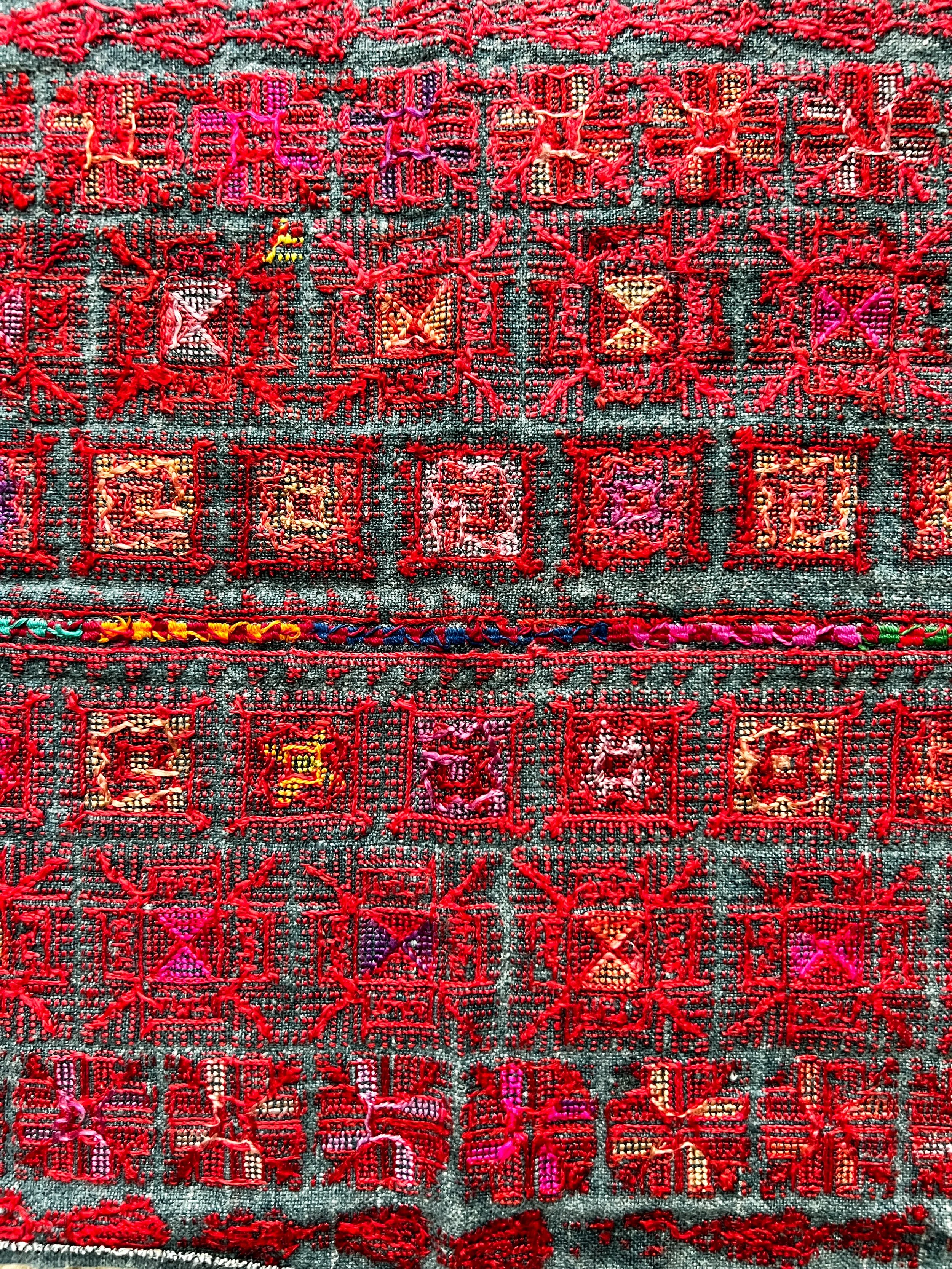
Palestinian embroidery, or tatreez, is a centuries-old art form preserved through oral history between mother and daughter. The Tatreez Institute, also known as Tatreez & Tea, was founded by Wafa Ghnaim in 2016 to preserve, research, and document Palestinian embroidery, dress, and history in the United States. This initiative was inspired by the legacy and work of her mother, Feryal Abbasi-Ghnaim, which she documented through oral history interviewing and digitizing family albums, stories, embroidery patterns, and recipes in her book Tatreez & Tea: Embroidery and Storytelling in the Palestinian Diaspora (first ed. 2016, second ed. 2018).
The Tatreez Institute is both an educational initiative and a study collection. Over the past decade, Ghnaim has taught Palestinian, Syrian, and Jordanian dress history and embroidery techniques to thousands of students, beginning with the Smithsonian and continuing across universities and museums worldwide. Her work has been featured in major media outlets, and she has published research at leading institutions while correcting dozens of museum dress collection records around the world. Ghnaim is a leading scholar in Palestinian and Syrian dress history, working with graduate and doctoral students, teaching at universities, and engaging with journalists on the cultural heritage of the region.
The Tatreez Institute dress collection began in 2021 as an endeavor by students to purchase Palestinian dress and donate them to Ghnaim for study. This effort quickly spread after the publication of her book THOBNA (2023), where Ghnaim continues to accept dress donations and is a steward of dress from across Southwest Asia and North Africa, rematriated from estates, vintage stores, and households worldwide. Through ongoing research, education, and restoration, the Institute supports the continued study of dress across generations in exile.
Dedicated to safeguarding intangible cultural heritage and preventing cultural erasure, the Institute stewards a growing collection of traditional dresses and headdresses from Palestine, Syria, Lebanon, Egypt, and Jordan. This study collection facilitates the research that is published by the Institute, and is stewarded through Palestinian hands. Through research, education, and restoration practices, the Institute ensures that the art of embroidery in Palestine, inclusive of the practices, skills, knowledge and rituals as inscribed by UNESCO in 2021, continues to be studied, practiced, and transmitted across generations living in exile.
As of the end of 2025, Ghnaim has authored 17 academic publications, journal articles, exhibition catalogues, and professional essays grounded in research from the Tatreez Institute Collection. Numerous additional publications by other scholars citing and engaging with the collection are currently in press or in development. The collection has also been presented through two exhibitions of Tatreez Inheritance at the Museum of the Palestinian People (2023) and Making Space Bmore (2025).
By December 31, 2025, the Tatreez Institute Collection comprises 266 objects, including 46 accessories, 86 traditional dresses, 2 dolls, 23 fragments, 14 headdresses and veils, 4 overcoat dresses, and 68 paper goods. Regional representation reflects the eastern Mediterranean, with approximately 70 percent Palestinian material, 10 percent Syrian, and 10 percent Lebanese, alongside selected embroideries from Egypt and Jordan. While the Institute continues to accept donations, Ghnaim ceased purchasing objects after October 7, 2023 in response to increasingly exploitative practices within the antiquities market that dramatically inflated the monetary value of Palestinian material.
Significant research, publication, and exhibition initiatives are planned for 2026. The Institute expresses deep gratitude to the individuals who have entrusted Ghnaim with objects and their accompanying histories. Meticulous records are maintained for each donation, and ongoing efforts are made to secure publication outlets and research funding that support the study, dissemination, and broader accessibility of the collection. The collection also serves as an active site of inquiry, informing collaborative study sessions with Palestinian and Syrian elders and supporting technical analysis conducted in scientific laboratories as part of Ghnaim’s continuing research.
Get Involved
Book classes, lectures, and stitching circles led by Wafa Ghnaim, a leading dress historian whose lifelong experience and growing body of research continue to shape the field of fashion and dress studies.
Donate a dress or other cultural heritage object to contribute to the Institute’s research and study collection.
Invest in dress research, documentation, and conservation by making a financial contribution to support the Institute’s mission.
Explore the e-courses available on the website, and cite Wafa’s work in your research and publications.
Contact
Email: wafa.ghnaim@gmail.com
Instagram: @tatreezandtea @thetatreezinstitute
Facebook: /tatreezandtea