About Wafa Ghnaim
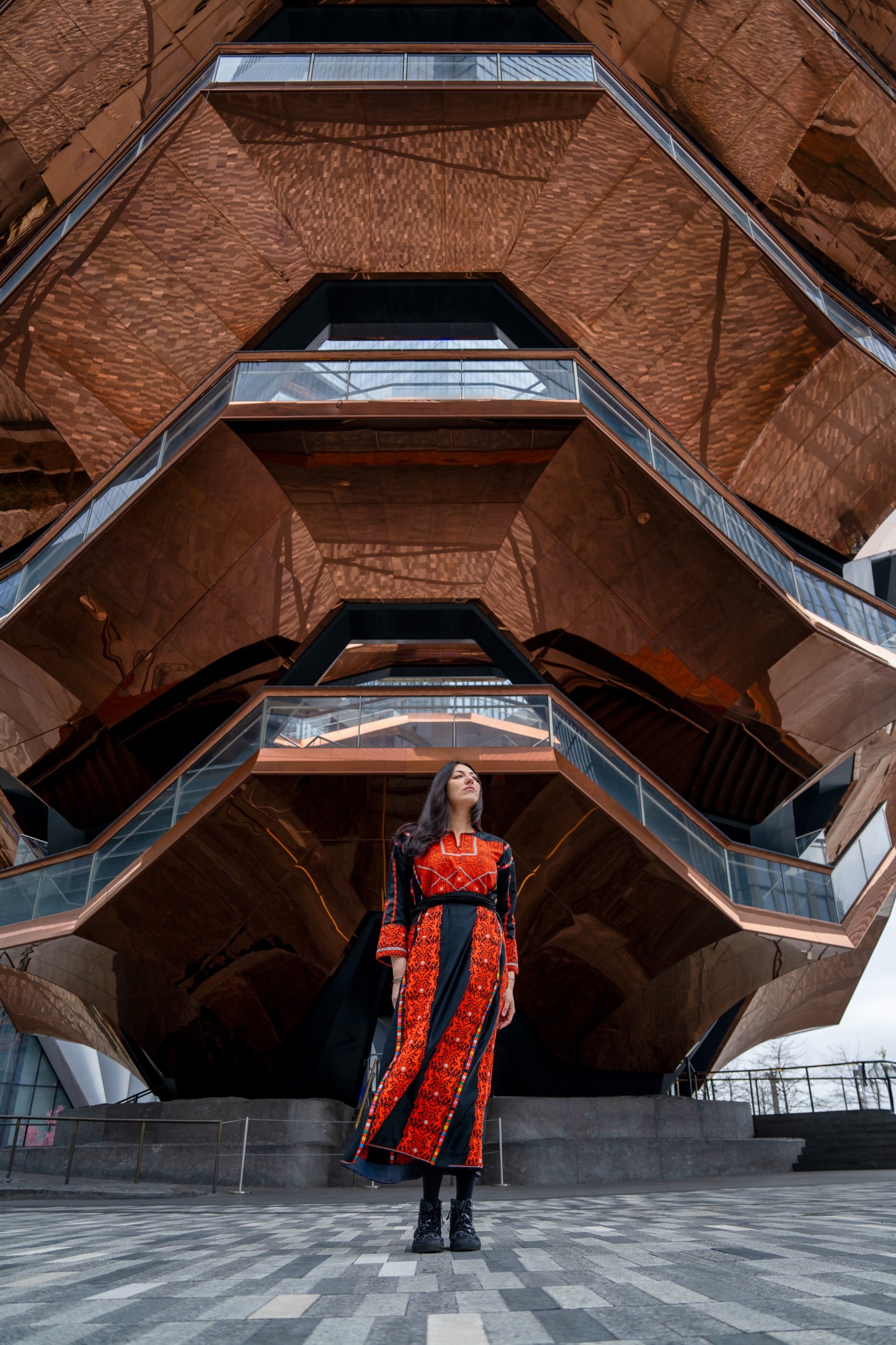
Photographer: Ashraf Hussein, 2024
Wafa Ghnaim is an art and dress historian, fashion researcher, embroiderer, curator, educator, and author specializing in Southwest Asian dress history, embroidery, and adornment. Her methodological approach unites material analysis, oral history, scientific study, anthropology, art history, and textile conservation that shape an interdisciplinary research practice centered on cultural heritage preservation. Her work is presented within a diasporic framework as a Palestinian living in exile. She learned Palestinian embroidery (tatreez in Arabic) from her mother, award-winning National Endowment for the Arts Heritage Fellow Feryal Abbasi-Ghnaim.
She is the author of Tatreez & Tea: Embroidery and Storytelling in the Palestinian Diaspora (2016; 2018), THOBNA (2023), Tatreez Companion (2024), and Tatreez Beauty: A Coloring Book (2024), with research published by the Metropolitan Museum of Art, the Art Institute of Chicago, the National Gallery of Singapore, and more. She was the first instructor for the Smithsonian (2017–2021) to teach Syrian and Palestinian embroidery, and in 2021 Vogue named her and her mother “the world’s leading guardians of tatreez.” Most recently, she was a Chester Dale Senior Interdisciplinary Research Fellow at the Metropolitan Museum of Art in the Antonio Ratti Textile Center, as well as a Research Scholar in the Department of Ancient West Asian Art (2023–2024). In 2025 she served as a contributing designer for the Victoria & Albert Museum’s Thread Memory: Embroidery from Palestine, curated by Rachel Dedman.
Ghnaim is the founder of the Tatreez Institute, through which she continues her mother’s educational legacy, teaching thousands of students worldwide and stewarding a growing collection of rematriated dresses. The collection includes approximately 300 objects, two-thirds of which are dresses, overcoats, and other traditional garments. The majority of the collection (76%) is from Historic Palestine, 13% from Syria, and 4% from Egypt. The remainder of the collection comes from Afghanistan, India, Nepal, Saudi Arabia, and other regions. The holdings span dresses, headdresses, veils, accessories, and related fragments, growing through community donations that support a long-term strategy of ethical stewardship, preservation, education, and research.
She now continues her preservation work as a Mellon Foundation Research Fellow at the Museum of the Palestinian People (2025–2027), for the Bayt wa Balad Digital Cultural Atlas.