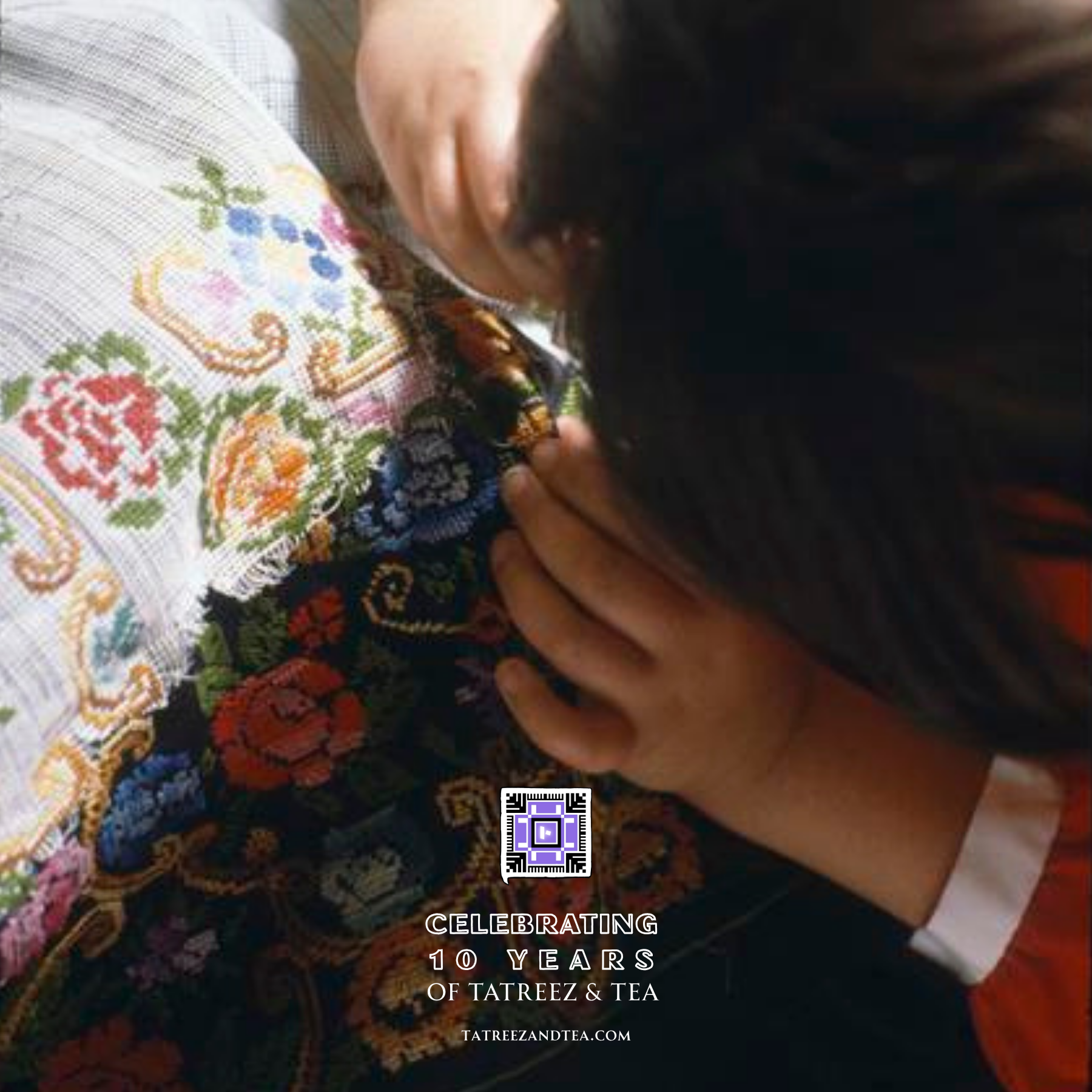
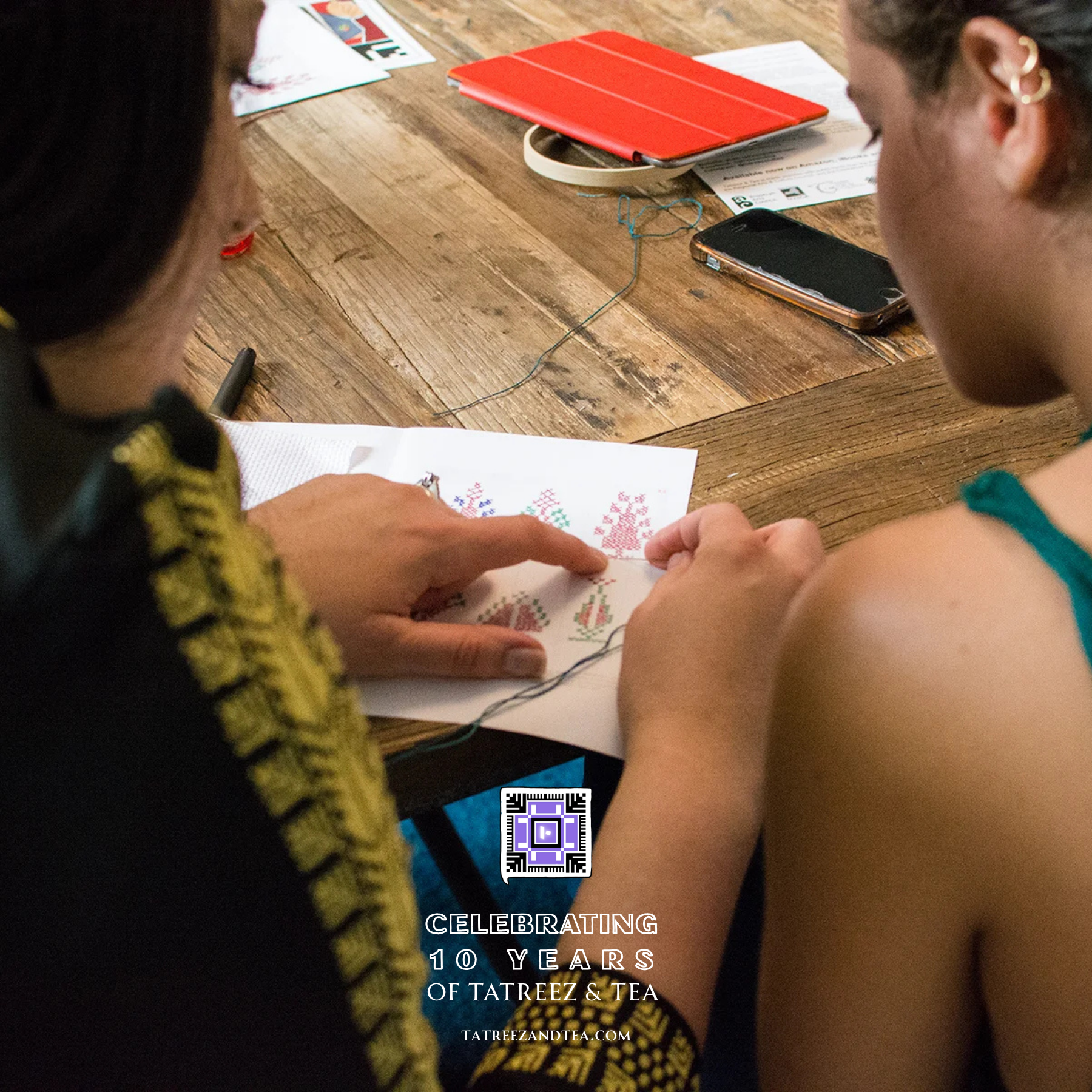
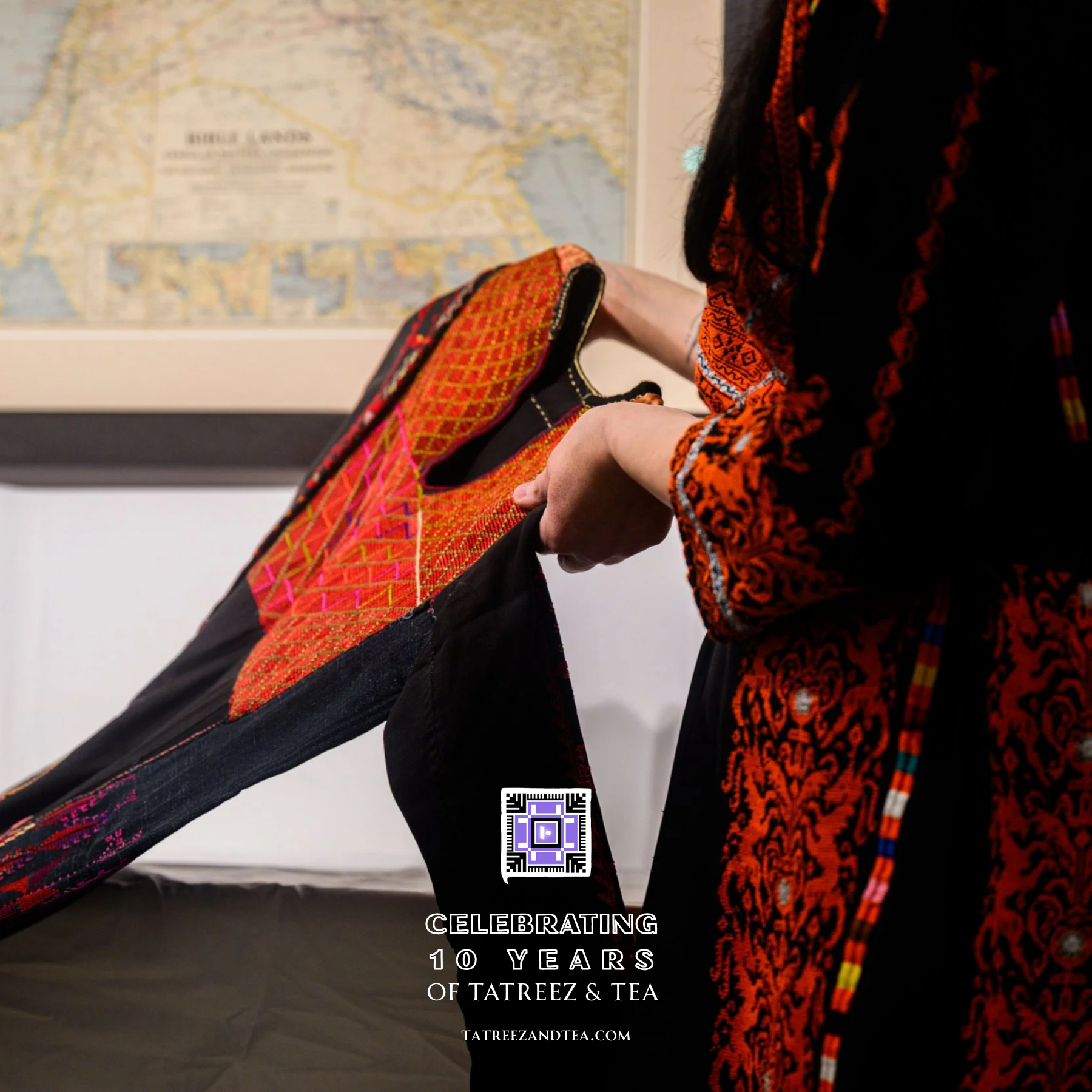
On November 15, 2016, the first edition of Tatreez & Tea: Embroidery and Storytelling in the Palestinian Diaspora was published.
The story of the book as we know it today, however, really began in 2014, when I applied for four grants through three organizations: the Regional Arts and Culture Council, Brooklyn Arts Council, and Clackamas County Arts Alliance. I was truly an unknown at this point in my career, I had experienced a major career failure, I was told my entire adult life that I was a terrible writer, and I was deeply unhappy in the work that I was doing in the financial sector of New York. At one point, I worked on Wall Street! It was one of the worst career experiences of my soul, but I suppose it was worth it to find the work that I was meant to do.
Surprisingly, my mother and I were fully funded by all three organizations. My mother, Feryal Abbasi-Ghnaim, was, and still is, an award-winning artist who had been funded for decades for her contributions to teaching Palestinian embroidery in the United States. I was surely following in her footsteps, but I had never imagined that Tatreez & Tea would become one of the most career-defining moments of my life.
In one of the earliest blog entries I wrote for this website, I wrote about how the grants covered the costs of publishing the book, studio time for photographing the embroidery, research travel, and the reading series and events that accompanied the project, among other expenses. Following the publication of the first edition, additional support came through individual donations from members of the arts community, as well as people who believed in the project. People who had worked with my mother, and many who were taking a chance by supporting me. That support—your support—allowed me to produce an expanded second edition, which was printed in 2018.
Almost immediately following the publication of the book in 2016, I began receiving invitations for podcasts, interviews, lectures, workshops, and other events. What started as a book project quickly grew into an arts education practice that became known as Tatreez & Tea, and later became the Tatreez Institute. Over the past ten years, the work has continued to expand through teaching, research, lectures, exhibitions, publications, and the development of new ways to make Palestinian embroidery knowledge accessible.
For the tenth anniversary, I wanted to return to some of the earliest materials I created for my classes. One of those projects is Tatreez Takeout, a return to printable tatreez patterns that students can use at home. I originally began the program under the COVID pandemic, when I was teaching 8-10 classes per week. I numbered the patterns according to the classes in which I originally taught them, beginning with the first one hundred classes I taught. The pattern numbers therefore reflect the history of the virtual classes themselves and the many students who learned these patterns with me over the years. Many of which turned to teach in their own local communities, and create online accounts about Palestinian embroidery. It has been a sincere pleasure teaching you all these years, and the honor of my life.
I am also celebrating the anniversary with a short print run of Tatreez & Tea from a local printer. This will be a limited printing and will include a special gift, and I hope those who have been waiting for the opportunity to purchase the book will consider getting a copy during this anniversary year.
This fall, I will also be offering a series of virtual lectures to commemorate ten years of Tatreez & Tea. These lectures will give me an opportunity to revisit some of the research and ideas that have shaped the work since the book was first published, while also looking at where my teaching and research are headed now. These classes are part of the Village Series, a 12-part course that I taught to more than 20 cohorts between 2020 and 2023. I am now in the process of re-teaching these courses and updating the curricula through these live programs. Once they are completed, they will be added to a new e-course portal, creating a permanent place where future generations can learn and study these materials.
Finally, I have great ambitions this year, as I celebrate a decade of research, to publish the Tatreez Institute dress collection online. This is an incredibly financial and labor-intensive undertaking, but I believe these dresses deserve the spotlight. I have a very limited capacity to exhibit the collection in person, and publishing these beautiful embroideries online will allow many more people to see, study, and enjoy these dresses than I am currently able to reach through exhibitions alone.
It is hard to believe that it has been ten years since I held the first printed copy of Tatreez & Tea in my hands. At the time, I could not have known how much would grow from that book, or how many people I would meet through the teaching and research that followed. Ten years later, I am still teaching, still researching, and still finding new ways to share Palestinian embroidery.
I am really grateful for your support. It has changed my little old life.